
July 19, 2026: Theatre Yesterday and Today, by Ron Fassler
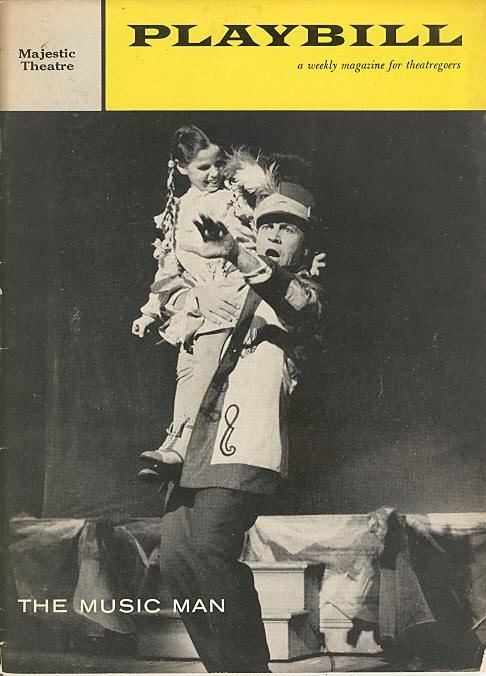
If your love of Broadway musicals has brought you to memorize songs like Meredith Willson’s “Trouble” from The Music Man, you probably had to look up all the antiquated things Professor Hill chatters about. A cistern? A dime novel? And what the hell was Captain Billy’s Whizbang?
That song is its own personal deep dive. For the purposes of this column, I’ve turned the clock back to when I first listened to original cast recordings that included references to things I’d only come to discover later. How did I reconcile singing along to songs with little idea of the many people, places, and things they mentioned? And could I possibly remember a time or two when, after multiple hearings, I finally figured out what something meant?
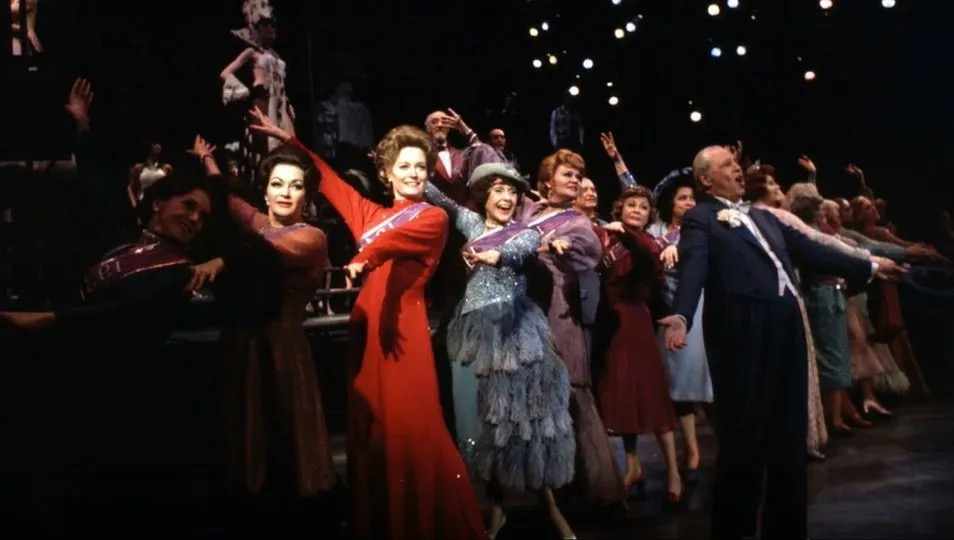
Astute musical theatre fans will recognize this column’s headline as the lyric to the closing stanza of Jerry Herman’s “Put on Your Sunday Clothes" from Hello, Dolly! I can’t tell you how old I was when I learned who the Astors were, but I didn’t find it hard to imagine a resectable well-to-do clan (as it turns out, one the wealthiest of the old New York families in the Gilded Age). I understood in the context of the song that they were rich and it seemed like it would be a thrill join them at Tony Pastor’s, which I always assumed was a fancy restaurant.
Until last week, that is.
“We’ll join the Astors at Tony Pastor’s
And this I’m positive of
That we won’t come home
That we won’t come home
That we won’t come home until we fall in love.”
Am I the only one all these years who thought it was a restaurant? I mean, where else would you join the Astors but for fine dining?
While reading an article about turn of the century New York, I was gob smacked to read that Tony Pastor’s was a theater. An impresario, his New 14th Street Theatre opened in 1881 near Union Square where he produced family-friendly variety entertainment aimed at drawing in women and children as opposed to rowdy burlesque and saloon shows of the day. In fact, Pastor is credited with being “the father of vaudeville.” Fancy that.

Obviously, there are gaps in my theatre education, particularly where vaudeville is concerned, otherwise I would known that Mr. Pastor was not a restauranteur. I’m just glad I was never cast in the chorus of Hello, Dolly! because I would have been singing my heart out about something to eat.
Tony Pastor’s closed in 1906 (not anachronistic for Dolly since it takes place in 1898). But while digging deeper, I found out that there was once a gay bar in Greenwich Village, established in 1939, called Tony Pastor’s. Named for the original showman, it was located at 130 West 3rd Street and was a haven in that neighborhood for gay men and women to gather. It serviced customers for close to thirty years before closing in 1967, just two years before the Stonewall Riots. With Dolly running on Broadway between 1964 and 1970, maybe a gay man like Jerry Herman was being somewhat hip by using an old reference and giving a wink and a nod to his brethren. Or maybe it was all about Pastor being an easy rhyme for Astor and nothing more.
Earlier in the same song, Cornelius sings “We’ll see the shows at Delmonico’s” and, for some reason, I always instinctively knew that it was a please to eat and be entertained, a la the fictional Harmonia Gardens, which is exactly what it was. Located at 5th Avenue at 26th Street, being invited to dine at Delmonico’s was about as highbrow as you could get. It meant you had successfully reached the peak of the social ladder in Gilded Age New York.
Another favorite musical of my youth was a different sort of New York musical— Guys and Dolls. It too presented a challenge to a little kid with its old-time references. When I directed a production of it in 2017, I created a glossary so that the twenty-somethings in the cast would know what they were talking about. For this show, Frank Loesser’s lyrics are in a class by themselves, and his music is every bit as good. And due to it having been written in 1950, there are references galore that once meant something to audiences seventy-five years ago and are no longer in the vernacular, such as these lyrics from “Marry the Man Today”:
“Slowly introduce him to the better things
Respectable, conservative, and clean
Readers Digest
Guy Lombardo
Rogers Peet
Golf!
Galoshes
Ovaltine!”
Not to brag, but even as a little kid, I was aware of Reader’s Digest and Guy Lombardo, so I was always good with those.
Reader’s Digest was the only magazine to which my grandparents subscribed; a mix of articles first published in other magazines, then shortened and summarized for palatability. In other words, a magazine to be read by people who don’t really like to read (my grandparents didn’t own a bookcase or a book). Though meaning nothing to anybody today, in the 1940s it had surpassed one million copies a month and was the best-selling publication in America — exceeded in sales only by the Bible.
Guy Lombardo was someone of whom I was aware from the time I was little because he was the band leader who broadcast with his Royal Canadian Orchestra every New Year’s Eve on television “coast to coast.” Their recording of “Auld Ol Lang Syne” is why it is synonymous with New Year’s Eve. And in my house (six kids), we all had our bedtimes suspended that night so we could stay up and party!

Rogers Peet was something I never gave a thought to until one day, while still a teenager, I was in Manhattan and stumbled upon a Rogers Peet store. I looked up and said, “So, that’s Rogers Peet!” The chain, first established in 1874, sold high men’s clothing and were known to have been the first to attach price tags to garments at a time when the established practice was to haggle. By 1950, when Guys and Dolls premiered, they were still riding high, but after being bought by Arrow Shirts in 1962, it was only about another twenty-year run before it succumbed to larger chains as well as the boom in malls across the country.
Golf! Galoshes! Golf, sure, but galoshes is an old-fashioned term now. My mother called them that, yet I know that if I told my young nieces to put on their galoshes, they would say, “You mean rain boots, right?”
Ovaltine. Still available in stores, it sadly once saw better days. Comparable to drinking Nesquik, Ovaltine commercials flooded the airwaves when I was a kid in the 1960s and 70s and, ironically, both products are now owned by Nestlé. And of course, its name is forever enshrined on celluloid courtesy of Cloris Leachman’s Frau Blücher in Mel Brooks and Gene Wilder’s Young Frankenstein.
And just for completion’s sake, here are the definitions to those “Trouble,” terms courtesy of the Merriam-Webster dictionary:
cistern: an artificial reservoir (such as an underground tank) for storing liquids and especially water (such as rainwater). A city boy like me had to look that up.
dime novel: usually a paperback, popular in the U.S. from about the mid-19th century to the early 20th often featuring a Western theme. I’m not old enough to remember books at that price, but that’s all my Batman and Superman comic books used to cost me.
As for Captain Billy’s Whizbang... well, it was a humor magazine filled with jokes and off-color humor that riffed on cultural hot topics of the day like shortening skirt lengths, bobbed hair, illegal alcohol, and speakeasies. However, it looks like Meredith Willson got a little bit ahead of himself with this one. The Music Man takes place in the summer of 1912, and the first issue of Captain Billy wasn’t until 1919.
Sssh. Don’t tell anyone.

Ron Fassler is the author of The Show Goes On: Broadway Hirings, Firings and Replacements. For news and “Theatre Yesterday and Today” columns when they break, please subscribe.


Write a comment ...