
October 30, 2026: Theatre Yesterday and Today, by Ron Fassler.
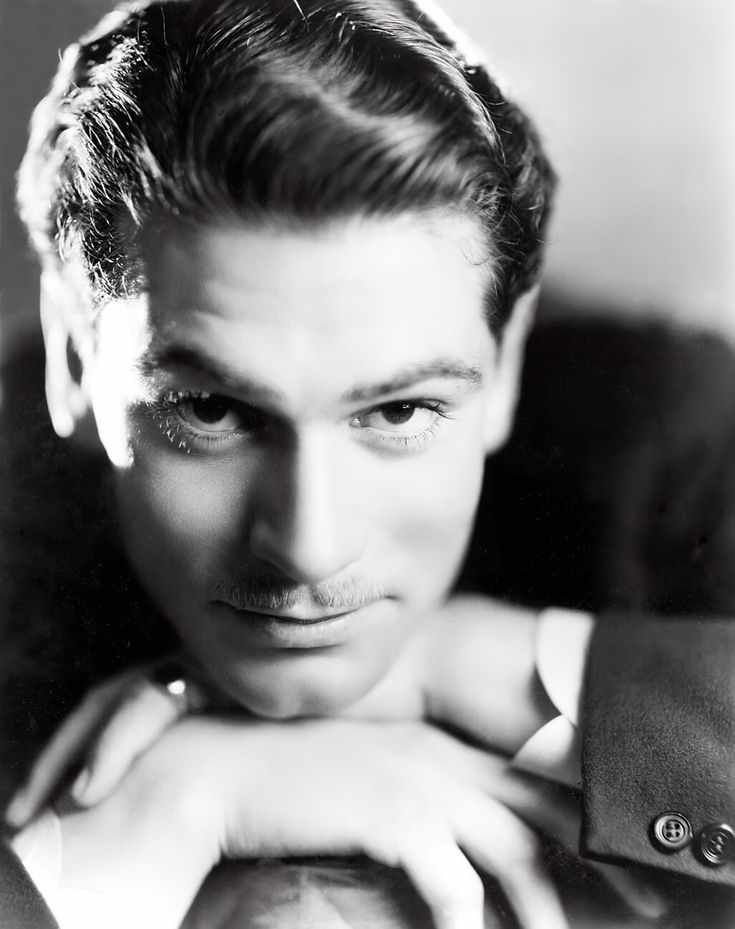
In 1953, a newbie young actress from Texas named Barbara Berman arrived in New York City only to get fired from her first job in the theatre. “To tell you the truth, the only reason I went was because I had a boyfriend who was living there. We were supposed to get married but couldn’t right away. Since I had gone to all the trouble of moving to New York, I figured I might as well try to act.” The actress changed her name to Barbara Barrie and went on to a notable seventy-year career on stage, on television, and in film. Since the announcement this week of her death at age ninety-five, tributes have poured in. Not only do they address the depth of her talents as an actor, but they also celebrate her humanity as a New Yorker in good standing. It has been heartwarming to read stories about people who chatted with her on the street or by the stage door, and about how accessible she was. In 2019, I enjoyed an afternoon at her apartment on the Upper West Side (that view!), where she invited me to chat, mostly about the very first show she did on Broadway, The Wooden Dish. Though the show dated to 1955 and ran just nine days, the years had done nothing to diminish her memories of working with such greats as Louis Calhern and John Randolph.
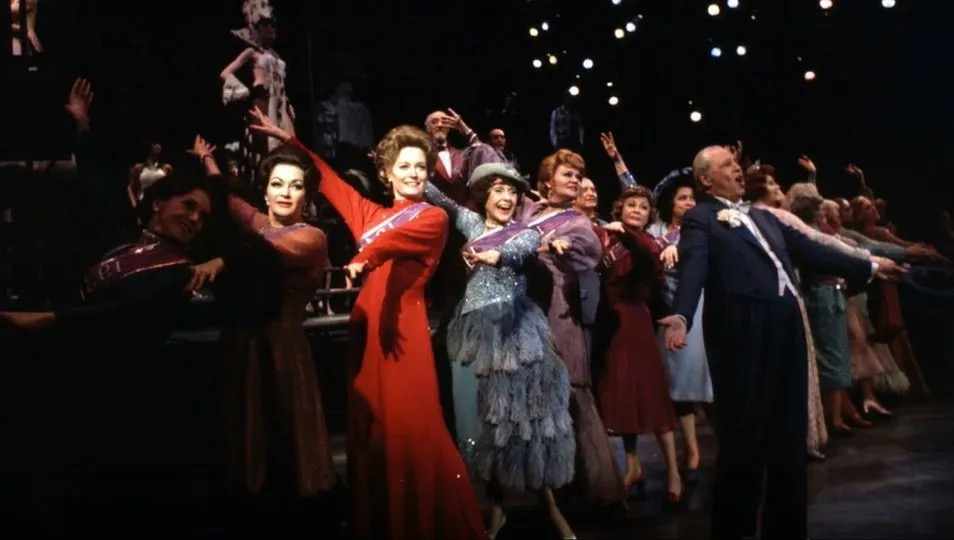
Having attended the theatre steadily since the time I was a teenager, I’ve had the good fortune to see Barrie in some of her most significant stage performances, including Stephen Sondheim and George Furth’s Company (1970), which earned her her sole Tony Award nomination. In my review of the landmark musical, written when I was thirteen, I called her “outstanding.” The fact is that she was rarely anything less than that in just about everything she did. She was the definition of charming as a future First Lady in The Selling of the President (1972), a strange musical based on journalist Joe McGinniss’s 1968 bestseller that dealt with the ways in which Richard Nixon and the men around him used Madison Avenue to package him as a product to the nation. I wish I had seen Barrie in the 1983 production of Torch Song Trilogy as Mrs. Beckoff, mother of Arnold, the Harvey Fierstein character. She was a two-week vacation replacement for Estelle Getty, who created the part, and it’s easy to imagine how she would have underplayed such a caustic character. Barrie never strained for a laugh. She knew how to get them with the utmost simplicity.

Barbara Ann Berman was born in Chicago on May 23, 1931. Her parents were Jewish and moved the family to Texas when Barrie was nine. She called Corpus Christi home and attended community college there before switching to the University of Texas in Austin, where she shared time in the acting program with some pretty interesting folks: Tom Jones and Harvey Schmidt (who wrote The Fantasticks), Robert Benton (Oscar winning filmmaker of Kramer vs. Kramer), entertainment journalist Liz Smith, and actors Elmore Rual Torn (Rip Torn) and Jayne Mansfield. “We had one professor named Francis Hodge,” Barrie recalled. “He would say, ‘Do less with more,’ meaning gesture less and feel deeply.” Looking for a way to expand her technique, once in New York, she studied with renowned acting teacher Uta Hagen. “I wouldn’t have had a career without Hagen’s classes,” Barrie said. “I didn’t really know how to act and yet I was earning a living. And Uta used to say, ‘You’re very slick. I have to find out what makes that slickness go, and we have to tear it apart.’”
Early on, Barrie did a good deal of Shakespeare. In 1958, she played Hermia in A Midsummer Night’s Dream, the Player Queen in Hamlet, and Dorcas in The Winter’s Tale at the American Shakespeare Festival Theatre in Stratford, Connecticut. She returned the following season as Anne Page in The Merry Wives of Windsor and Diana in All’s Well That Ends Well. In the 1960s, Joe Papp used Barrie in his Shakespeare productions at the Delacorte Theatre in Central Park, with her Viola in Twelfth Night (1969) a standout, a role she would later cite as her favorite. She also played Annie Sullivan in a State Department tour of Europe in William Gibson’s The Miracle Worker.

The early days of live television were good to her and significant guest spots on shows like Naked City and Ben Casey helped not just with paying the bills but getting a name for herself. Then, in 1964, Barrie pulled off a fete that was a genuine surprise. She starred in One Potato, Two Potato, an independent, low-budget, black & white film, which at age thirty-two, won her the Best Actress award at the Cannes Film Festival, in a tie with Anne Bancroft for The Pumpkin Eater. One of the earliest films to deal with an interracial romance, Larry Peerce’s domestic drama was Oscar nominated for original screenplay. In it, Barrie is a white divorcee who falls in love with a Black man (Bernie Hamilton). Events lead to a child custody battle with her former husband (Richard Mulligan) and, in a gut-wrenching scene late in the picture, Barrie comes apart after her child is taken away from her by the court. But the film didn’t do anything for her feature film career, so she returned to the theatre.
In the 1970s, she starred in two Neil Simon comedies on Broadway. In The Prisoner of Second Avenue (1973), she played opposite Art Carney when the pair replaced its original stars Lee Grant and Peter Falk. In California Suite (1976), she created two characters in the four one-acts that make up the play, alongside Tammy Grimes, George Grizzard, and Jack Weston.


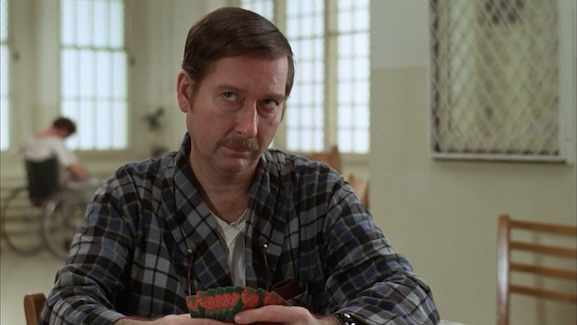
Then came Breaking Away (1979), an enormous sleeper hit of both critical and financial acclaim. According to the Hollywood Reporter, Barrie had read a revised script and noticed that “it was about a boy who is at odds with his father but who is a chop off the old block of his mother. Yet you never see a scene between him and his mother.” So, she asked Peter Yates, the director, for something that might serve to bridge the gap, which led to the memorable scene where she shows her son her unused passport and urges him to follow his dreams. “That scene would not have been in the picture if I hadn’t asked for it.” Her Academy Award nomination for Best Supporting Actress was one of five the film received. It won Best Original Screenplay for Steve Tesich.
Over the years, Barrie appeared on many sitcoms in memorable guest starring roles such as The Mary Tyler Moore Show, in which she played a woman testing the virtue of a very-married Murray, and was a series regular on Barney Miller (as Mrs. Miller) and Suddenly Susan as Brooke Shields’ grandmother. She even repeated her role as the mom in Breaking Away when it was briefly a half-hour series. With 123 IMDB films and television credits, she still never strayed far from the New York stage and her home turf of Manhattan.
In 2017, at age eighty-three, she turned in a touching, perfectly executed performance in Joshua Harmon’s Significant Other on Broadway. In a full circle moment, her character’s last name was Berman.

Barrie was married to Jay Harnick, brother of the famed lyricist Sheldon Harnick, until his death in 2007, a union that lasted forty-three years. Jay was the longtime artistic director of TheaterWorksUSA, a children’s touring theatre company that is still going strong sixty-five years after he founded it, a lasting legacy.
Acting right up until last year, Barrie’s final credit is a small role in the feature film Things Like This (2025)
And just for fun, she was a prolific painter and author, penning two critically acclaimed novels for young adults: Lone Star (1989) and Adam Zigzag (1995). She also wrote Second Act (1997), a frank and humorous memoir chronicling a 30-year experience first with irritable bowel syndrome (IBS) and her later battle with cancer. Diagnosed with terminal cancer three weeks before her death, Barrie chose to end her life on her own terms, a decision supported by her two children, Jane and Aaron. According to the New York Post, “We were planning her death and her memorial at the same time and she was fine with it,” her daughter said. “She was weighing in on who should speak and what the music should be and she was really fine with that. She was ready to go. She knew 95 was old enough.”
Once asked how she prepared before going onstage, Barrie told an interviewer, “Well, I get everything straightened at home and I get on the 104 bus and go to the theater.” Simple is as simple does. Barbara Barrie walked the walk and talked the talk. And rode the bus.
Ron Fassler is the author of The Show Goes On: Broadway Hirings, Firings and Replacements. For news and “Theatre Yesterday and Today” columns when they break, please subscribe.








Write a comment ...